Buy خح.com ?
We are moving the project
خح.com .
Are you interested in purchasing the domain
خح.com ?
domain@kv-gmbh.de · 0541-91531010
Buy خح.com ?
What are irregular verbs and strong verbs?
Irregular verbs are verbs that do not follow the regular pattern of adding -ed to form their past tense and past participle. Instead, they have unique forms for these tenses. Strong verbs are a type of irregular verb that form their past tense and past participle by changing the vowel sound in the base form of the verb. These verbs often have a more complex and unpredictable pattern of inflection compared to regular and weak verbs. **
What are modal verbs in the German language?
Modal verbs in the German language are a specific group of verbs that express necessity, possibility, ability, or permission. These verbs include können (can), müssen (must), dürfen (may), sollen (should), wollen (want), and mögen (like). They are used to modify the meaning of other verbs in a sentence and are often followed by an infinitive verb. Modal verbs also have their own conjugation patterns and can be used to express different levels of certainty or obligation in a sentence. **

Similar search terms for Verbs
Top-Angebote
Products related to Verbs:
-
"""The Language of Yes""" """The Language of Yes Les Fruits Rouges Rose 2024 Rosé Wine - California""""""A medium salmon-colored rosé in which both Grenache and Cinsaut show their varietal typicity and inspire the moniker, \""Les Fruits Rouges.\"" A structured, pink-orange wine with vivid acidity and some tannin for a firm mouthfeel. Unique, earthy,..."22,97 $*Shipping: 0,00 $Secure redirect to the provider
-
"""The Language of Yes""" """The Language of Yes Les Fruits Rouges Rose 2025 Rosé Wine - California""""""A medium salmon-colored rosé in which both Grenache and Cinsaut show their varietal typicity and inspire the moniker, \""Les Fruits Rouges.\"""23,97 $*Shipping: 0,00 $Secure redirect to the provider
-
Summersdale Doggie Language by Lili Chin - Hardback - Illustrated Guide to Dog Body Language - Perfect Gift for Dog OwnersDoggie Language by Lili Chin is a beautifully illustrated hardback guide that decodes canine body language for dog owners, trainers, and animal lovers of all experience levels. Written and illustrated by Lili Chin, this compact yet comprehensive handbook turns subtle tail wags, ear positions, and posture shifts into a clear visual language anyone can learn. It's an ideal resource for new puppy parents, seasoned dog owners, and anyone looking to build a deeper bond with their four-legged companion. Dogs communicate constantly through body language, but much of what they're telling us goes unnoticed or misread, often leading to unnecessary stress for both dog and owner. This guide addresses this gap with warm, friendly illustrations mapping out common canine postures, facial expressions, and tail positions.3,95 £*Shipping: 2,99 £Secure redirect to the provider



-
Can you please explain the difference between main verbs, auxiliary verbs, and modal verbs?
Main verbs are the primary verbs in a sentence that express the main action or state of being. Auxiliary verbs, also known as helping verbs, are used alongside main verbs to form different tenses, moods, or voices. Modal verbs are a type of auxiliary verb that express possibility, necessity, ability, or permission. They are used to modify the meaning of the main verb in a sentence. **
-
What are regular verbs in English and irregular verbs?
Regular verbs in English are verbs that follow a predictable pattern when forming their past tense and past participle forms. They simply add "-ed" to the base form of the verb to create the past tense and past participle forms. For example, "walk" becomes "walked" and "play" becomes "played." Irregular verbs, on the other hand, do not follow this pattern and have unique past tense and past participle forms that do not end in "-ed." For example, "go" becomes "went" and "eat" becomes "ate." These irregular forms must be memorized as they do not follow a consistent rule. **
-
Can Italian reflexive verbs be used as modal verbs?
No, Italian reflexive verbs cannot be used as modal verbs. Reflexive verbs in Italian indicate that the subject of the verb is also the recipient of the action. On the other hand, modal verbs in Italian express possibility, necessity, or ability. While both types of verbs are important in Italian grammar, they serve different functions and cannot be used interchangeably. **
-
Are verbs capitalized?
Verbs are not capitalized unless they are at the beginning of a sentence. In regular writing, verbs are typically written in lowercase letters. However, in titles or headings where all major words are capitalized, verbs may be capitalized as well. **


What are verbs?
Verbs are words that express action, occurrence, or state of being. They are an essential part of speech and are used to convey the action or state of the subject in a sentence. Verbs can be in different tenses, such as past, present, or future, and can also be modified to show aspects like continuous or perfect. In English, verbs are conjugated to match the subject and can also be used with auxiliary verbs to form different tenses and moods. **
What is the difference between main verbs, auxiliary verbs, and modal verbs? Can you also give an example?
Main verbs are the primary verbs in a sentence that express the main action or state of being, such as "run," "eat," or "sleep." Auxiliary verbs, also known as helping verbs, are used in conjunction with main verbs to form different tenses, voices, or moods, such as "be," "have," or "do." Modal verbs are a type of auxiliary verb that express possibility, necessity, or ability, such as "can," "could," "must," or "should." For example, in the sentence "She is running," "is" is the auxiliary verb and "running" is the main verb. In the sentence "He can swim," "can" is the modal verb and "swim" is the main verb. **
Top-Angebote
Products related to Verbs:
-
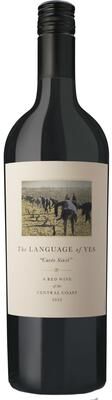
"""The Language of Yes""" """The Language of Yes Cuvee Sinso 2022 Red Wine - California""""""A French-inspired, Cinsaut-based red blend. Cinsaut and Syrah co-fermented for two weeks to extract color and texture. A small amount of Grenache from Rancho Réal was blended for fragrance. Aged in neutral barrels and stainless. Exuberantly..."26,97 $*Shipping: 0,00 $Secure redirect to the provider
-
"""The Language of Yes""" """The Language of Yes Les Fruits Rouges Rose 2024 Rosé Wine - California""""""A medium salmon-colored rosé in which both Grenache and Cinsaut show their varietal typicity and inspire the moniker, \""Les Fruits Rouges.\"" A structured, pink-orange wine with vivid acidity and some tannin for a firm mouthfeel. Unique, earthy,..."22,97 $*Shipping: 0,00 $Secure redirect to the provider
-
"""The Language of Yes""" """The Language of Yes Les Fruits Rouges Rose 2025 Rosé Wine - California""""""A medium salmon-colored rosé in which both Grenache and Cinsaut show their varietal typicity and inspire the moniker, \""Les Fruits Rouges.\"""23,97 $*Shipping: 0,00 $Secure redirect to the provider
-
What are irregular verbs and strong verbs?
Irregular verbs are verbs that do not follow the regular pattern of adding -ed to form their past tense and past participle. Instead, they have unique forms for these tenses. Strong verbs are a type of irregular verb that form their past tense and past participle by changing the vowel sound in the base form of the verb. These verbs often have a more complex and unpredictable pattern of inflection compared to regular and weak verbs. **
-
What are modal verbs in the German language?
Modal verbs in the German language are a specific group of verbs that express necessity, possibility, ability, or permission. These verbs include können (can), müssen (must), dürfen (may), sollen (should), wollen (want), and mögen (like). They are used to modify the meaning of other verbs in a sentence and are often followed by an infinitive verb. Modal verbs also have their own conjugation patterns and can be used to express different levels of certainty or obligation in a sentence. **
-
Can you please explain the difference between main verbs, auxiliary verbs, and modal verbs?
Main verbs are the primary verbs in a sentence that express the main action or state of being. Auxiliary verbs, also known as helping verbs, are used alongside main verbs to form different tenses, moods, or voices. Modal verbs are a type of auxiliary verb that express possibility, necessity, ability, or permission. They are used to modify the meaning of the main verb in a sentence. **
-
What are regular verbs in English and irregular verbs?
Regular verbs in English are verbs that follow a predictable pattern when forming their past tense and past participle forms. They simply add "-ed" to the base form of the verb to create the past tense and past participle forms. For example, "walk" becomes "walked" and "play" becomes "played." Irregular verbs, on the other hand, do not follow this pattern and have unique past tense and past participle forms that do not end in "-ed." For example, "go" becomes "went" and "eat" becomes "ate." These irregular forms must be memorized as they do not follow a consistent rule. **
Similar search terms for Verbs
-
Summersdale Doggie Language by Lili Chin - Hardback - Illustrated Guide to Dog Body Language - Perfect Gift for Dog OwnersDoggie Language by Lili Chin is a beautifully illustrated hardback guide that decodes canine body language for dog owners, trainers, and animal lovers of all experience levels. Written and illustrated by Lili Chin, this compact yet comprehensive handbook turns subtle tail wags, ear positions, and posture shifts into a clear visual language anyone can learn. It's an ideal resource for new puppy parents, seasoned dog owners, and anyone looking to build a deeper bond with their four-legged companion. Dogs communicate constantly through body language, but much of what they're telling us goes unnoticed or misread, often leading to unnecessary stress for both dog and owner. This guide addresses this gap with warm, friendly illustrations mapping out common canine postures, facial expressions, and tail positions.3,95 £*Shipping: 2,99 £Secure redirect to the provider
-
RLF Home Tradition Provance Valance"Fits Windows up to 50""W. Use multiples for Wider Windows. Decorator's quality fabrics. Fully lined with Poly/Cotton Ivory lining. Use a 2-1/2"" Continental Rod, a regular 3/4"" Curtain rod, Tension rod or Decorative pole no more than 1-3/8"" Diameter."64,49 $*Shipping: 0,00 $Secure redirect to the provider
-
"""Gardet Cuvee Brut Tradition Champagne - France""""""The color is yellowy honey gold. The aromas are decidedly winey and full. It explodes with hints of wheat and chalk. In the mouth it immediately gives white summer fruits with stone. Altogether fresh, with a full-bodied consistency that holds..."53,99 $*Shipping: 0,00 $Secure redirect to the provider
-
Can Italian reflexive verbs be used as modal verbs?
No, Italian reflexive verbs cannot be used as modal verbs. Reflexive verbs in Italian indicate that the subject of the verb is also the recipient of the action. On the other hand, modal verbs in Italian express possibility, necessity, or ability. While both types of verbs are important in Italian grammar, they serve different functions and cannot be used interchangeably. **
-
Are verbs capitalized?
Verbs are not capitalized unless they are at the beginning of a sentence. In regular writing, verbs are typically written in lowercase letters. However, in titles or headings where all major words are capitalized, verbs may be capitalized as well. **
-
What are verbs?
Verbs are words that express action, occurrence, or state of being. They are an essential part of speech and are used to convey the action or state of the subject in a sentence. Verbs can be in different tenses, such as past, present, or future, and can also be modified to show aspects like continuous or perfect. In English, verbs are conjugated to match the subject and can also be used with auxiliary verbs to form different tenses and moods. **
-
What is the difference between main verbs, auxiliary verbs, and modal verbs? Can you also give an example?
Main verbs are the primary verbs in a sentence that express the main action or state of being, such as "run," "eat," or "sleep." Auxiliary verbs, also known as helping verbs, are used in conjunction with main verbs to form different tenses, voices, or moods, such as "be," "have," or "do." Modal verbs are a type of auxiliary verb that express possibility, necessity, or ability, such as "can," "could," "must," or "should." For example, in the sentence "She is running," "is" is the auxiliary verb and "running" is the main verb. In the sentence "He can swim," "can" is the modal verb and "swim" is the main verb. **
* All prices are inclusive of VAT and, if applicable, plus shipping costs. The offer information is based on the details provided by the respective shop and is updated through automated processes. Real-time updates do not occur, so deviations can occur in individual cases. ** Note: Parts of this content were created by AI.