Buy خح.com ?
We are moving the project
خح.com .
Are you interested in purchasing the domain
خح.com ?
domain@kv-gmbh.de · 0541-91531010
Buy خح.com ?
Which stylistic devices are used in epigrams?
Epigrams often use stylistic devices such as irony, paradox, and wordplay to convey a clever or witty message in a concise manner. They may also employ techniques such as alliteration, puns, and juxtaposition to create a memorable and impactful statement. Additionally, epigrams frequently utilize brevity and conciseness to pack a punch in just a few lines, making them effective in capturing the reader's attention and leaving a lasting impression. **
What are aphorisms and epigrams by Goethe and Schiller?
Aphorisms and epigrams by Goethe and Schiller are short, concise statements that convey deep insights or truths about life, human nature, or the world. They are often witty, thought-provoking, and memorable, making them popular for their wisdom and literary value. Both Goethe and Schiller were renowned German writers and philosophers who used aphorisms and epigrams to encapsulate their ideas and philosophies in a succinct and impactful way. Their works are still widely studied and admired for their profound observations and timeless relevance. **


Similar search terms for Epigrams
Top-Angebote
Products related to Epigrams:
-
Phaidon Press Cat by Phaidon Editors - A whimsical visual survey of the house cat in art and popular cultureA whimsical visual survey of the house cat in art and popular culture, exploring humanity’s enduring connection to one of our most loved animal companions Cats have been beloved and depicted by humans for millennia. These captivating animals appeared as worship statuettes in ancient Egypt, in anthropomorphic illustrations in Victorian England, and, today, in contemporary artwork, on fashion runways, and as social media memes. Cat celebrates how our feline friends have been depicted in art, popular culture, and history across time and around the world. This vibrantly illustrated book features more than 210 full-page images artfully arranged into playful pairings. Filled with famous artworks, vintage advertisements, classic animations, high-end fashion designs, and more, the book presents a stunning array of imagery, from maneki-neko lucky cats to artists’ pets,and ancient mosaics to contemporary couture. Readers will find iconic pop-culture characters, including Puss in Boots, the Cheshire Cat, and more; renowned artists, such as Andy Warhol, Tracey Emin, Judy Chicago, and Utagawa Hiroshige; and famed creatives, including street-style photographer Jamel Shabazz and fashion designer Thom Browne. Balancing style with substance, the book includes a foreword by Hannah Shaw, also known as Kitten Lady, who declares that celebrating the cat in images empathetically connects us to this beloved animal, and an enlightening essay by curator Leïla Jarbouai, who traces humanity’s symbiotic relationship with cats through the lens of art history. Featuring an elegant and irresistible cover design depicting a curled-up black cat, this charming volume revels in the undeniable appeal of this captivating animal. Advisory panel: Yekaterina Barbash, Claire Catterall, Anja Charbonneau, Mihoko Iida, Leïla Jarbouai, Jenny Pierson, Hannah Shaw aka Kitten Lady, Anna Stothart, BriAnne Wills, and Kristiina Wilson Additional texts: Sara Bader, Yekaterina Barbash, Tim Cooke, Anita Croy, Ellen Mara De Wachter, Catherine Ingram, Leïla Jarbouai, Rebecca Morrill, Ilana Novick, Hannah Silver, Katy Sprinkel, David Trigg, and Alexandra Zagalsky21,99 £*Shipping: 2,99 £Secure redirect to the provider
-
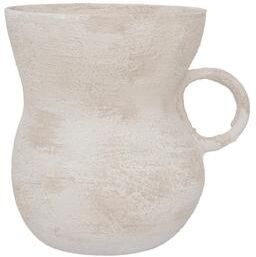
Urban Nature Culture Vase RelaxedQuiet elegancy comes to life in Urban Nature Culture's vase Relaxed. Handmade in Portugal, this ceramic vase has a shape beyond anything you've seen - it's organic, it flows and steals your heart with its playful ear.123,40 $*Shipping: 0,00 $Secure redirect to the provider


-
What is the translation of the epigrams by Martial?
The epigrams by Martial are translated from Latin to English. Martial was a Roman poet known for his witty and often satirical epigrams, which are short, clever, and often humorous poems. Translating his work involves capturing the essence of his original Latin text while also conveying the humor and wordplay in English. The translations aim to preserve the wit and sharpness of Martial's epigrams while making them accessible to English-speaking audiences. **
-
Is there a website with Martial epigrams that exclusively contain elegiac couplets?
Yes, there is a website called The Latin Library that features the works of Martial, including his epigrams written in elegiac couplets. The website provides a collection of Martial's poems in their original Latin text, making it a valuable resource for those interested in studying his elegiac couplets. Additionally, The Latin Library offers English translations of Martial's epigrams for those who may not be proficient in Latin but still want to enjoy his work. **
-
How can one forget culture and heritage?
One can forget culture and heritage by not actively engaging with it, by being disconnected from one's roots and community, and by prioritizing other aspects of life over preserving and celebrating one's cultural identity. This can happen through assimilation into a different culture, lack of exposure to one's own cultural traditions and practices, and a lack of interest in learning about one's heritage. Additionally, societal pressures and discrimination can also contribute to the erasure of one's culture and heritage. **
-
Can you please summarize the epigrams of Martial and the gerund for the Latin assignment for me?
Certainly! Martial's epigrams are short, witty poems that often satirize Roman society and individuals. They are known for their sharp humor and keen observations. The gerund in Latin is a verbal noun that is formed by adding -nd to the stem of the verb. It is used to express the idea of "doing" something or "being in the process of" doing something. **

What is the difference between culture and tradition?
Culture refers to the beliefs, customs, arts, and social behaviors of a particular group of people, encompassing a broader range of practices and values. On the other hand, tradition specifically refers to the customs and practices that are passed down from generation to generation within a specific community or society. While culture is more dynamic and can evolve over time, traditions tend to be more static and rooted in history and heritage. **
What is the meaning of tradition, culture, and identity?
Tradition refers to the customs, beliefs, and practices that are passed down from generation to generation within a community or society. Culture encompasses the shared values, beliefs, and behaviors of a particular group of people, including their language, art, music, and social norms. Identity is the sense of self and belonging that is shaped by one's cultural background, traditions, and experiences. Together, tradition, culture, and identity form the foundation of a person's sense of belonging and connection to their community and heritage. **
Top-Angebote
Products related to Epigrams:
-
Langley Street Islamic Wall Art Mashallah Tabarakallah – Metal Arabic Calligraphy Decor Black 29cm H X 99cm WIslamic Wall Art featuring the phrase Mashallah Tabarakallah brings spiritual elegance and Arabic calligraphy artistry into any room. Handcrafted from brushed steel with a smooth, sophisticated black finish, this metal wall décor carries the meaning behind two cherished Islamic expressions — Mashallah ("As Allah wills") and Tabarakallah ("Blessed is Allah") — together forming a heartfelt reminder of gratitude and protection from the evil eye. Standoff screws lift the calligraphy away from the wall for a raised, floating 3D effect that catches the light beautifully. Hang it above the sofa, in a prayer corner, or along a hallway to create a calm, faith-centred atmosphere your family feels every time they pass by. At 99cm wide and just 1.5kg, it's a striking yet lightweight statement piece. A thoughtful Muslim gift for Eid, Ramadan, Hajj, or a new home, this Arabic calligraphy wall art brings quiet reflection and lasting beauty to your space. Made in Türkiye Brand Name: Langley Street.65,99 £*Shipping: 0,00 £Secure redirect to the provider
-
Phaidon Press Cat by Phaidon Editors - A whimsical visual survey of the house cat in art and popular cultureA whimsical visual survey of the house cat in art and popular culture, exploring humanity’s enduring connection to one of our most loved animal companions Cats have been beloved and depicted by humans for millennia. These captivating animals appeared as worship statuettes in ancient Egypt, in anthropomorphic illustrations in Victorian England, and, today, in contemporary artwork, on fashion runways, and as social media memes. Cat celebrates how our feline friends have been depicted in art, popular culture, and history across time and around the world. This vibrantly illustrated book features more than 210 full-page images artfully arranged into playful pairings. Filled with famous artworks, vintage advertisements, classic animations, high-end fashion designs, and more, the book presents a stunning array of imagery, from maneki-neko lucky cats to artists’ pets,and ancient mosaics to contemporary couture. Readers will find iconic pop-culture characters, including Puss in Boots, the Cheshire Cat, and more; renowned artists, such as Andy Warhol, Tracey Emin, Judy Chicago, and Utagawa Hiroshige; and famed creatives, including street-style photographer Jamel Shabazz and fashion designer Thom Browne. Balancing style with substance, the book includes a foreword by Hannah Shaw, also known as Kitten Lady, who declares that celebrating the cat in images empathetically connects us to this beloved animal, and an enlightening essay by curator Leïla Jarbouai, who traces humanity’s symbiotic relationship with cats through the lens of art history. Featuring an elegant and irresistible cover design depicting a curled-up black cat, this charming volume revels in the undeniable appeal of this captivating animal. Advisory panel: Yekaterina Barbash, Claire Catterall, Anja Charbonneau, Mihoko Iida, Leïla Jarbouai, Jenny Pierson, Hannah Shaw aka Kitten Lady, Anna Stothart, BriAnne Wills, and Kristiina Wilson Additional texts: Sara Bader, Yekaterina Barbash, Tim Cooke, Anita Croy, Ellen Mara De Wachter, Catherine Ingram, Leïla Jarbouai, Rebecca Morrill, Ilana Novick, Hannah Silver, Katy Sprinkel, David Trigg, and Alexandra Zagalsky21,99 £*Shipping: 2,99 £Secure redirect to the provider
-
Which stylistic devices are used in epigrams?
Epigrams often use stylistic devices such as irony, paradox, and wordplay to convey a clever or witty message in a concise manner. They may also employ techniques such as alliteration, puns, and juxtaposition to create a memorable and impactful statement. Additionally, epigrams frequently utilize brevity and conciseness to pack a punch in just a few lines, making them effective in capturing the reader's attention and leaving a lasting impression. **
-
What are aphorisms and epigrams by Goethe and Schiller?
Aphorisms and epigrams by Goethe and Schiller are short, concise statements that convey deep insights or truths about life, human nature, or the world. They are often witty, thought-provoking, and memorable, making them popular for their wisdom and literary value. Both Goethe and Schiller were renowned German writers and philosophers who used aphorisms and epigrams to encapsulate their ideas and philosophies in a succinct and impactful way. Their works are still widely studied and admired for their profound observations and timeless relevance. **
-
What is the translation of the epigrams by Martial?
The epigrams by Martial are translated from Latin to English. Martial was a Roman poet known for his witty and often satirical epigrams, which are short, clever, and often humorous poems. Translating his work involves capturing the essence of his original Latin text while also conveying the humor and wordplay in English. The translations aim to preserve the wit and sharpness of Martial's epigrams while making them accessible to English-speaking audiences. **
-
Is there a website with Martial epigrams that exclusively contain elegiac couplets?
Yes, there is a website called The Latin Library that features the works of Martial, including his epigrams written in elegiac couplets. The website provides a collection of Martial's poems in their original Latin text, making it a valuable resource for those interested in studying his elegiac couplets. Additionally, The Latin Library offers English translations of Martial's epigrams for those who may not be proficient in Latin but still want to enjoy his work. **
Similar search terms for Epigrams
-
Urban Nature Culture Vase RelaxedQuiet elegancy comes to life in Urban Nature Culture's vase Relaxed. Handmade in Portugal, this ceramic vase has a shape beyond anything you've seen - it's organic, it flows and steals your heart with its playful ear.123,40 $*Shipping: 0,00 $Secure redirect to the provider
-
How can one forget culture and heritage?
One can forget culture and heritage by not actively engaging with it, by being disconnected from one's roots and community, and by prioritizing other aspects of life over preserving and celebrating one's cultural identity. This can happen through assimilation into a different culture, lack of exposure to one's own cultural traditions and practices, and a lack of interest in learning about one's heritage. Additionally, societal pressures and discrimination can also contribute to the erasure of one's culture and heritage. **
-
Can you please summarize the epigrams of Martial and the gerund for the Latin assignment for me?
Certainly! Martial's epigrams are short, witty poems that often satirize Roman society and individuals. They are known for their sharp humor and keen observations. The gerund in Latin is a verbal noun that is formed by adding -nd to the stem of the verb. It is used to express the idea of "doing" something or "being in the process of" doing something. **
-
What is the difference between culture and tradition?
Culture refers to the beliefs, customs, arts, and social behaviors of a particular group of people, encompassing a broader range of practices and values. On the other hand, tradition specifically refers to the customs and practices that are passed down from generation to generation within a specific community or society. While culture is more dynamic and can evolve over time, traditions tend to be more static and rooted in history and heritage. **
-
What is the meaning of tradition, culture, and identity?
Tradition refers to the customs, beliefs, and practices that are passed down from generation to generation within a community or society. Culture encompasses the shared values, beliefs, and behaviors of a particular group of people, including their language, art, music, and social norms. Identity is the sense of self and belonging that is shaped by one's cultural background, traditions, and experiences. Together, tradition, culture, and identity form the foundation of a person's sense of belonging and connection to their community and heritage. **
* All prices are inclusive of VAT and, if applicable, plus shipping costs. The offer information is based on the details provided by the respective shop and is updated through automated processes. Real-time updates do not occur, so deviations can occur in individual cases. ** Note: Parts of this content were created by AI.